It’s been a while but’s its finally time to climb back into the saddle and resume exploring one of the most famous planets in our solar system: our scrappy little cousin, Mars.
Mars, the fourth planet from the sun in our solar system, is one of the most studied planets out there. We’ve sent a whole parade of robotic explorers to poke, prod, drill, and photograph its dusty surface. The most recent bot, NASA’s Perseverance, has been up there on Mars’ surface since 2021. Why all the fuss? Because Mars is surprisingly Earth-like and may once have had the potential to support life. Scientists believe that long ago, Mars had liquid water. Surface features show signs of ancient riverbeds and water flow, and soil analysis reveals elements consistent with a wetter past. These days? Not so much.
Still, the idea that it used to have water keeps hope alive. After all, humanity does enjoy having a backup plan. You know… just in case we keep “experimenting” with Earth’s thermostat a little too enthusiastically.
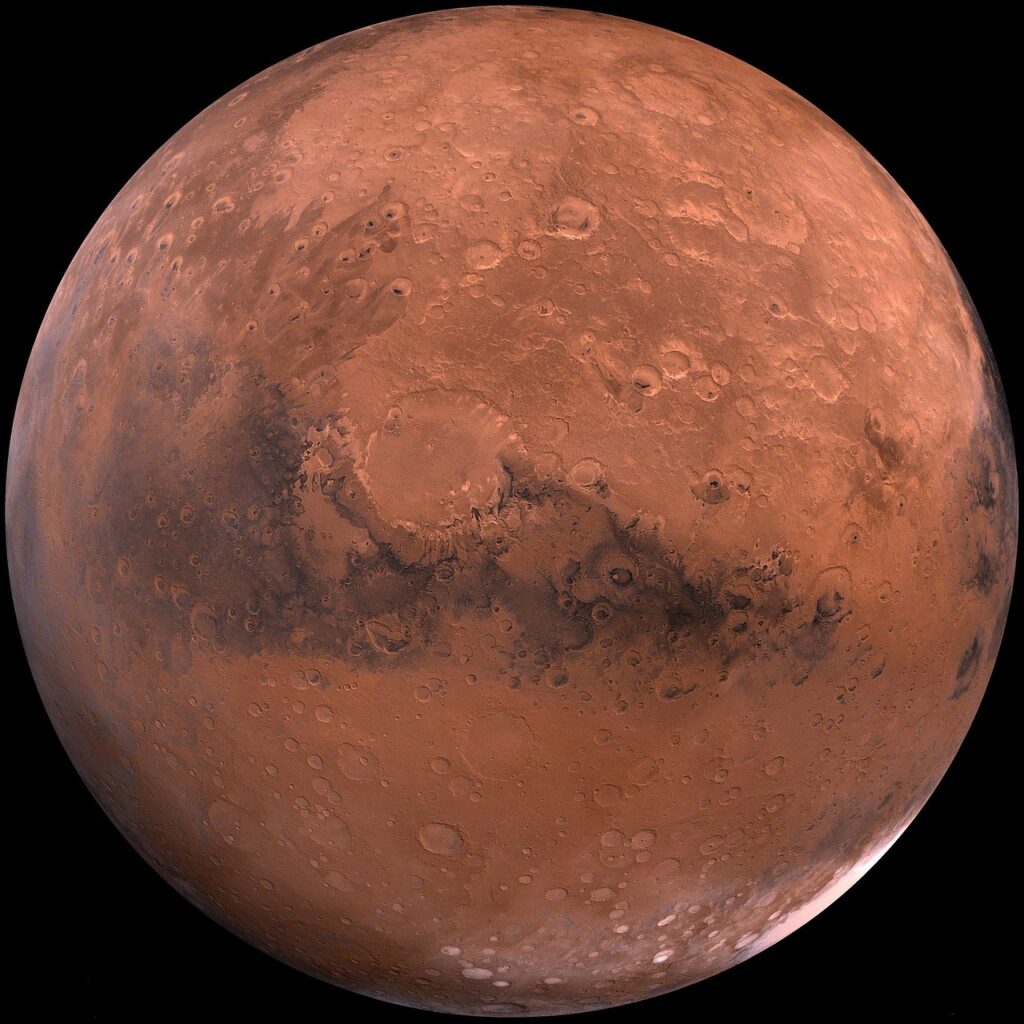
Image by WikiImages from Pixabay
Mars does share some impressive geographical features with Earth—volcanoes, mountains, and canyons—but it’s much smaller and significantly colder. One major reason for that deep-freeze vibe is its thin atmosphere. It simply can’t trap greenhouse gases the way Earth’s atmosphere does, keeping us warm and cozy (and occasionally questioning our life choices). Mars is basically what happens when a planet forgets to bring a jacket.
And here’s a fun twist: while Mars looks bright red in our night sky, its actual surface is more brown and tan. The red glow comes from iron oxide—aka rust—dust swirling through the atmosphere during massive dust storms. Think less “cherry red showstopper” and more “windswept desert chic.” I love a good desert aesthetic, but Mars may have committed a bit too hard to the theme.
If you’d like to dive deeper into Martian facts and missions, our ever-dependable space overachievers at NASA have a great overview here:
https://science.nasa.gov/mars/facts/
Mars has been visible to the naked eye for thousands of years, so ancient cultures couldn’t exactly miss its reddish glow. That color quickly led to associations with blood — and from there, war. Logical? Perhaps. Optimistic? Not so much.
The Mesopotamians linked it to Nergal, their god of fire, disease, and warfare (a real bundle of joy). The Egyptians associated it with Anhur, their war god. The Greeks named it after Ares, and the Romans after Mars — both deities tied to ambition, aggression, and battle. I’m sensing a theme…
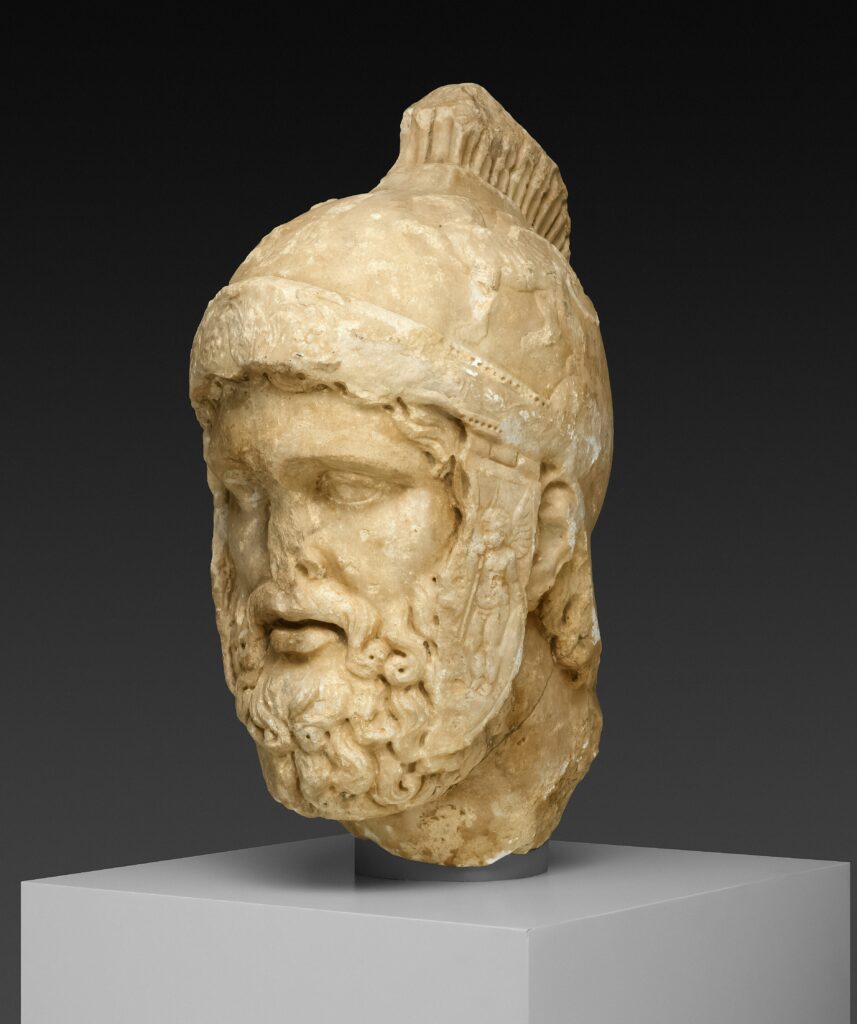
Photo by Art Institute of Chicago on Unsplash
These Gods of war weren’t just chaotic rage monsters. Many cultures viewed their war deities as fierce protectors—strong figures who fought against evil. So Mars energy isn’t just about starting fights. It’s also about defending what matters. Think less “random bar brawl,” more “hero with a sword and a mission.” Excuse me for a minute while a certain Norse Avenger comes to mind…….but I digress.
But why did humanity settle on red = blood = war? Why not red = blood = life? Or red = heart = love? A bit of romance would have been nice. As it turns out, red wasn’t only about violence. It was also connected to vitality, courage, strength, and power — and yes, war, because blood tends to make a dramatic impression. It was never just one meaning. It was all of it.
If you’re curious, there’s an interesting exploration of the color red in ancient Greece over at Deep Symbol that adds helpful context. This more wholistic view of Mars gives us a fuller picture of the role that the planet plays in astrology. Mars didn’t merely symbolize war; it represented raw, individual vitality in all its glory.
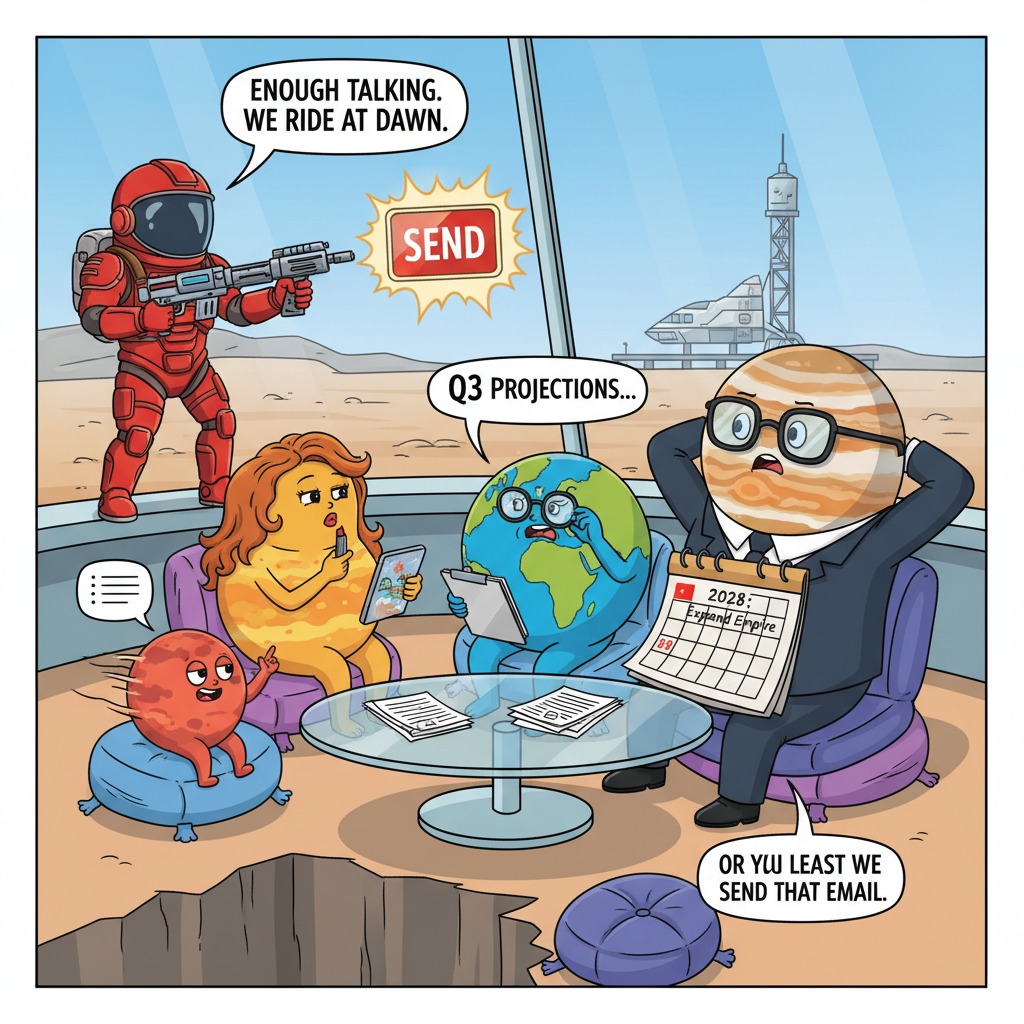
Astrologically speaking, Mars is said to influence action, passion, ambition, courage, and yes—aggression. I like to think of it this way: without Mars energy, we’d all be sitting around in a circle discussing our five-year plans while nothing actually gets done. Mars is the friend who says, “Enough talking. We ride at dawn.” Or at least, “We send that email.”
Mars can go into retrograde, albeit a lot less often than Mercury (thankfully). Remember: retrograde simply means the planet appears to move backward in the sky from our perspective on Earth due to differing orbital speeds. It’s not actually reversing course. When this happens, astrologically, it is said to mess with our motivation. Energy can feel sluggish. Projects stall. Patience wears thin. In an earlier post, I mentioned that when Mars retrograded in my sign last year, I spent a solid week horizontal on the couch. Was it celestial influence? Burnout? An excellent blanket? We may never know.
But actually, I prefer to think of retrogrades as built-in cosmic review sessions, instead of causers of mischief and mayhem. Mars retrograde can be a time to pause, rethink strategy, rest up, and consider whether charging forward is actually the best move. Is there potential conflict brewing? Maybe now’s the time to address it calmly—before it explodes into full gladiator mode. And sometimes it pays to exercise a bit of caution instead of going full steam ahead.
Mars retrogrades about every 26 months. Check Astrology.com or the Old Farmer’s Almanac for retrograde dates. And yes… we just finished one yesterday. So if you had recently been feeling unusually inclined to loaf around the house, side-eye your to-do list, and postpone world domination until further notice, congratulations. It wasn’t procrastination. It was planetary. Oh thank God, I thought it was just me. Thankfully Mars is direct now although, I understand that most of you will not be reading this in real time anyway so just check the links to see where Mars is now.
So now we arrive at the question everyone is quietly wondering: how does Mars actually affect you?

Like all the other planets we’ve discussed, Mars plays a role in your life. Let’s start with where it appears in your birth chart. The sign Mars was in when you were born reveals what energizes you and how you express anger, motivation, and desire.
For example, if you have Mars in Leo, performing on stage might light you up. Being ignored could irritate you more than you’d like to admit. And yes, you may have a dramatic streak that carries over into your love life. Subtle is not the goal here.
If your Mars is in Pisces, you might feel energized when volunteering or supporting humanitarian causes. You may express anger indirectly, or avoid confrontation altogether. And when it comes to romance, think atmosphere over spotlight. Throw in a little water and you’re good to go.
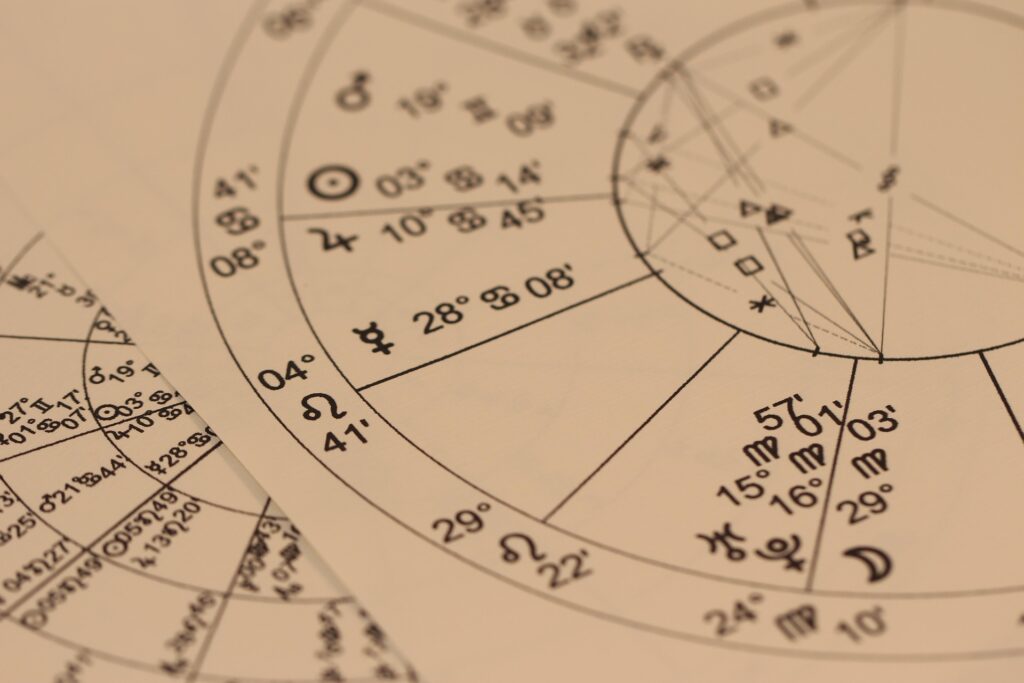
Image by MiraCosic from Pixabay
Next, consider which house Mars occupies in your chart. The houses represent areas of life, so wherever Mars lands is where you’re likely to feel passion, ambition, and occasionally the urge to argue.
Mars in the 7th house of relationships, for instance, can indicate a strong drive to build partnership. You’ll work hard for it — but one of your triggers may be when a partner is not pulling their weight. Meanwhile, Mars in the 1st house often signals ambition for personal achievement. Independence feels essential. Group projects, however, may test your patience.
If you’d like to explore Mars by sign and house, sites like Cafe Astrology offer helpful overviews, and Astro-Charts is a solid free option for generating a birth chart.
Now, a note for those practicing sidereal astrology. Most free chart sites calculate using the tropical zodiac. If you follow the sidereal zodiac, you’ll need to adjust your Sun sign accordingly, which can shift your house placements. The planetary positions themselves — like Mars in Aries or Venus in Capricorn — are calculated based on the actual positions of the planets at your birth. Those don’t change. What most likely will shift is your Sun Sign (1st house), and therefore the corresponding house placements.
So yes, it can feel like you’re doing light accounting work with the cosmos. But once you understand the difference, the charts can be very insightful.
For example, I discovered that Mars was in my 3rd house of communication when I was born. Suddenly, my lifelong habit of speaking first and reflecting later made a little more sense (insert foot in mouth here). It’s nice to know it’s written in the stars and not just a personal talent for awkward timing. Growth is ongoing.
The other way Mars shows up in your life is through transits — where Mars is currently moving in the sky. Mars changes signs roughly every two months, give or take.
When Mars transits your Sun sign, you may feel a surge of energy, confidence, and perhaps a slight increase in impatience. Your drive can spike in more ways than one. You’ve been warned. Insert wink here.

If Mars isn’t in your sign, look at which house it’s currently activating in your chart by seeing what sign Mars is in right now and then figuring out what house in your chart that sign represents.
For example, if Mars is transiting your 8th house of transformation and shared resources, you might find the strength to confront something deeply personal. Just try not to turn every discussion into a dramatic showdown. If it’s moving through your 2nd house of income and assets, you may feel intensely motivated to build financial security. That’s productive — as long as you don’t decide sleep is optional. Astro-Library has a nice write up about Mars transiting your natal houses. It’s worth a look to see how Mars is affecting your personal life.
There is another aspect of astrology that I have not really had much time to delve into, but maybe in a future post I will tackle the subject: planetary aspects. Planetary aspects look at planets as they relate to each other in the sky. It discusses the angles the planets make with each other using language such as “conjunct” and “trine”. So that is one more way that astrologers analyze planetary influences. If you would like to explore this further you can check out Astro-Nectar’s write up on Mars Transits.
Wherever Mars transits, it brings decisive energy, ambition, and momentum. Mars represents vitality — that raw life force that pushes us forward. It also brings the temptation to overdo it-keep that in mind. To work constructively with Mars energy, build in pauses. Rest. Reflection. Maybe cool down and remove any confrontational language before sending that email, but still do it. It’s time. The energy of Mars is meant to be harnessed. Wherever it is showing up in your life, make no mistake about it, you have been given the gift of enough energy to finally get something done.
And honestly, who doesn’t want to feel that spark again?
If Mars sparks the action, our next blog post — Jupiter – will teach us how to raise the stakes even higher. Until then, enjoy the warmth of the flame as it lights up your corner of the sky.
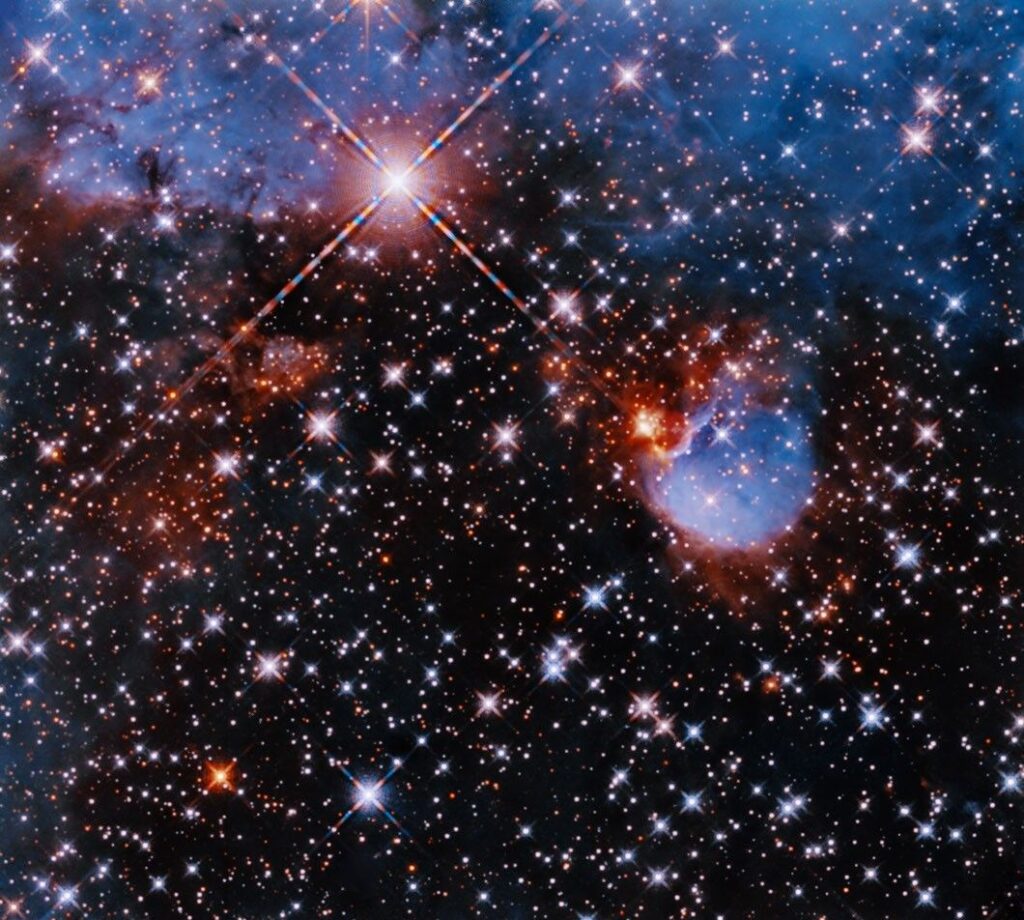
This Hubble image showcases the star-forming region GAL-305.20+00.21. The bright spot in the center-right of the image is an emission nebula, glowing gas that is ionized by a protostar buried within the larger complex of gas and dust clouds.
Image credit: NASA, ESA, and R. Fedriani (Instituto de Astrofisica de Andalucia); Processing: Gladys Kober (NASA/Catholic University of America)
Leave a Reply